How Motivation Is Built, Not Given.
Wings Team
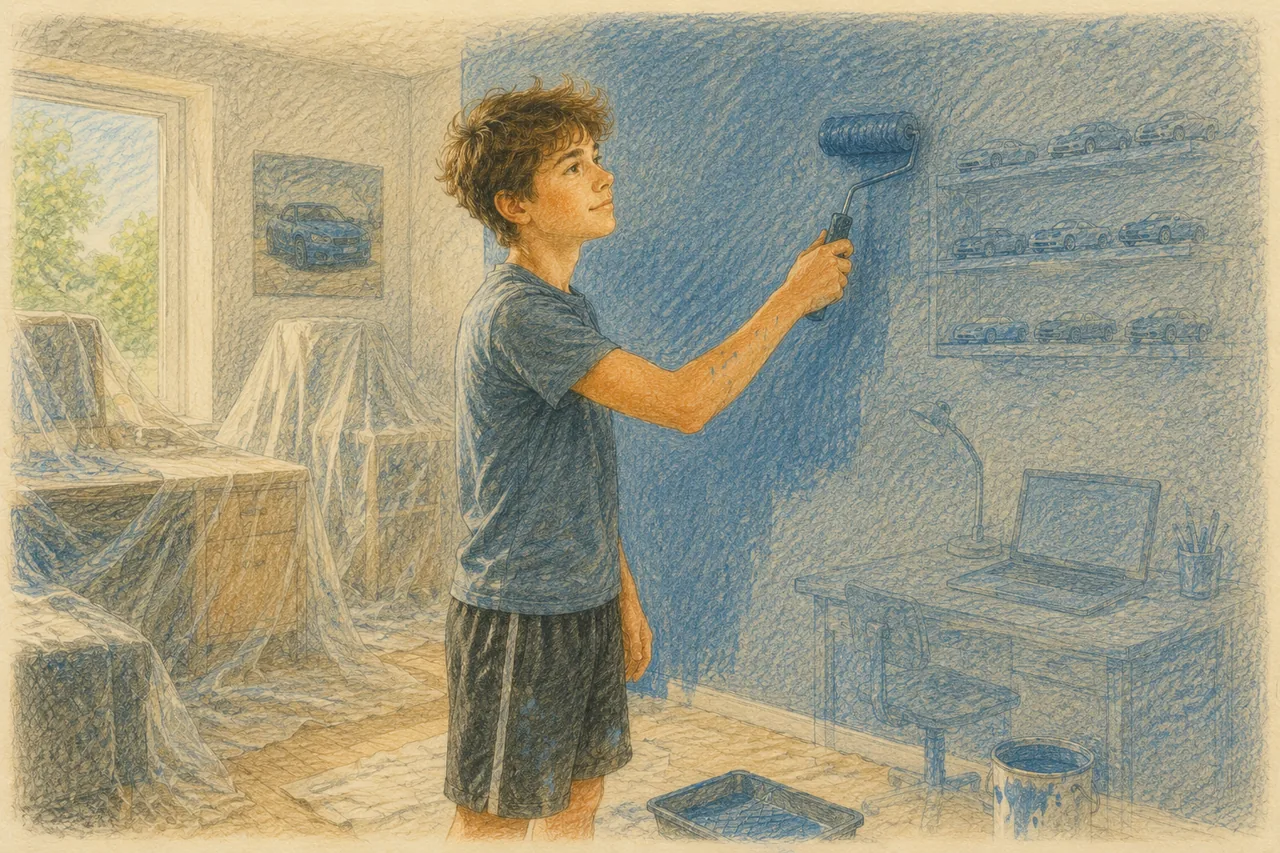
"How do I make him want to?" – a question every parent has asked. But motivation can't be inserted from outside – not with a reward, not with a demand. It's built, by creating the conditions in which it grows on its own. And, to many people's surprise, the usual levers – rewards and pressure – often work against you. Let's look at what motivation actually grows from – honestly, backed by research.
In short: what motivation grows from
Motivation isn't an innate trait ("you have it or you don't"), and it isn't something you can pour in with a reward. It grows when three needs are met: autonomy (I choose this, I'm not being forced), competence (I'm succeeding, the task is within reach), and connection (I'm loved and supported). This is the core of Deci and Ryan's Self-Determination Theory – one of the most tested frameworks in the psychology of motivation.
Why a reward can DIM interest
It sounds paradoxical, but it's a classic result. In the study by Lepper, Greene, and Nisbett (1973), preschoolers who already loved drawing were split: some were promised a "reward for drawing," others weren't. A week later, in free play, the ones who'd been promised a reward drew about half as much as the others. The promised reward seemed to "rewrite" the reason: I draw not because I like it, but "for the prize." Deci (1971) found the same with adults and a puzzle.
But an honest caveat matters. Not every reward hurts. A large analysis of 128 studies (Deci, Koestner, and Ryan, 1999) clarified:
- What dims interest is specifically expected, tangible rewards for something already interesting – and most of all in children.
- Unexpected thanks and praise for the process don't dim interest – and can even help.
- For genuinely boring tasks a reward is fine: there's no interest to undermine.
| Dims intrinsic interest | Doesn't dim / helps |
|---|---|
| an expected reward for something already enjoyed | sincere praise for process and effort |
| "do it and you'll get…" for a beloved activity | unexpected thanks |
| control: "you have to," "because I said so" | choice and explaining "why" |
| pressure and deadline-as-threat | a manageable challenge – within reach, but with effort |
The three pillars of motivation
Autonomy. This isn't "doing it alone" or a lack of limits – it's the sense of "I want this myself." It grows from real choice (how, when, which one) and explaining "why," not from commands.
Competence. Motivation feeds on success earned through effort. The task should be at the edge of ability: too easy is boring, too hard is anxiety-making. Csikszentmihalyi called that state of absorption "flow." Break tasks into reachable steps.
Connection. Motivation holds up inside warm, secure relationships. A child tries more willingly where they feel involvement, not judgment.
Control dims, support grows
Parenting research (Grolnick and Ryan, 1989; Joussemet, Landry, and Koestner, 2008) shows: parents who support autonomy (offer choice, give reasons, acknowledge feelings) have children who are more self-motivated and better adjusted at school. And psychological control – guilt, "you'll upset me," love-withdrawal – erodes motivation.
Two important guardrails, so we don't swing to the other extreme:
- Autonomy isn't permissiveness. Limits and clear structure are needed; they coexist perfectly with autonomy.
- Structure isn't control. "Clear rules" are helpful; what harms is pressure and manipulation.
How this connects to praise
Briefly: praise the process, not the "smarts." Praising ability ("you're so clever") lowers persistence and interest after the very first failure (Mueller and Dweck, 1998), while praising effort and strategy preserves motivation. More on this in the growth-mindset article.
What builds motivation: in practice
- Give real choice. Let the child shape the "how" and "when" – that's the feeling of autonomy.
- Explain "why," don't command. A reason helps them accept even an unloved task.
- Match the challenge. At the edge of ability, success through effort.
- Praise the process, not the label. Specific and sincere.
- Be present. Warmth and involvement are the soil motivation grows in.
- Drop controlling language. "You have to," "because I said so," threats and guilt all erode it.
- Don't bribe for what's already enjoyed. Save rewards for the boring; prefer unexpected thanks.
- Support the child's interests. Intrinsic motivation grows from curiosity.
Frequently asked questions
Do rewards and sticker charts work? For boring tasks – yes, as a temporary nudge. But for something a child already enjoys, an expected reward often dims the interest. Better: unexpected thanks and praise for the process.
Is autonomy the same as permissiveness? No. Autonomy is about choice and "I want this myself," not the absence of limits. Clear rules and structure are needed and pair well with autonomy.
Is motivation innate – "you have it or you don't"? No. Motivation is built or eroded by the environment: by supporting autonomy, manageable tasks, and warm relationships – or by control and pressure.
How do I make a child do something they don't want to? "Making" them rarely works long-term. What helps is explaining "why," choice within limits, breaking it into reachable steps, and calm involvement – not pressure.
How Wings helps
Wings is built to grow intrinsic motivation, not to replace it with rewards. Every day it's one short task or question for the child (ages 2–14): autonomy – there's no "right answer," they can think their own way; competence – the task fits their age and is within reach; connection – it's five minutes together with you. No prizes, no pressure, no guilt – exactly the conditions in which motivation grows on its own. Try it free →
Sources
- Ryan, R. M., & Deci, E. L. (2000). "Self-Determination Theory and the Facilitation of Intrinsic Motivation…" American Psychologist, 55(1), 68–78. (The three needs: autonomy, competence, relatedness.) DOI · PubMed
- Lepper, M. R., Greene, D., & Nisbett, R. E. (1973). "Undermining Children's Intrinsic Interest with Extrinsic Reward." Journal of Personality and Social Psychology, 28(1), 129–137. DOI
- Deci, E. L. (1971). "Effects of Externally Mediated Rewards on Intrinsic Motivation." Journal of Personality and Social Psychology, 18(1), 105–115. DOI
- Deci, E. L., Koestner, R., & Ryan, R. M. (1999). "A Meta-Analytic Review of Experiments Examining the Effects of Extrinsic Rewards on Intrinsic Motivation." Psychological Bulletin, 125(6), 627–668. (Expected tangible rewards undermine; praise doesn't.) DOI · PubMed
- Grolnick, W. S., & Ryan, R. M. (1989). "Parent Styles Associated with Children's Self-Regulation and Competence in School." Journal of Educational Psychology, 81(2), 143–154. DOI
- Joussemet, M., Landry, R., & Koestner, R. (2008). "A Self-Determination Theory Perspective on Parenting." Canadian Psychology, 49(3), 194–200. DOI
- Mueller, C. M., & Dweck, C. S. (1998). "Praise for Intelligence Can Undermine Children's Motivation and Performance." Journal of Personality and Social Psychology, 75(1), 33–52. DOI · PubMed
- Csikszentmihalyi, M. (1990). Flow: The Psychology of Optimal Experience. (Flow: challenge matched to skill.) Google Books
Last updated: July 2026.
Try Wings free
Free trial, then a monthly subscription.